English
 Arabic
 French
 Spanish
 Portuguese
 Deutsch
 Turkish
 Dutch
 Italiano
 Russian
 Romaian
 Portuguese (Brazil)
 Greek
Faith Sani - Ojo Ogbegbele Mp3 Download
Music |
2026-10-17 07:53:53
 YouDae
 Withdrawal Rules
 Eeghteen
 Publisher Policy
 D Blogger
 JambNest
See All

Upgrade to Pro
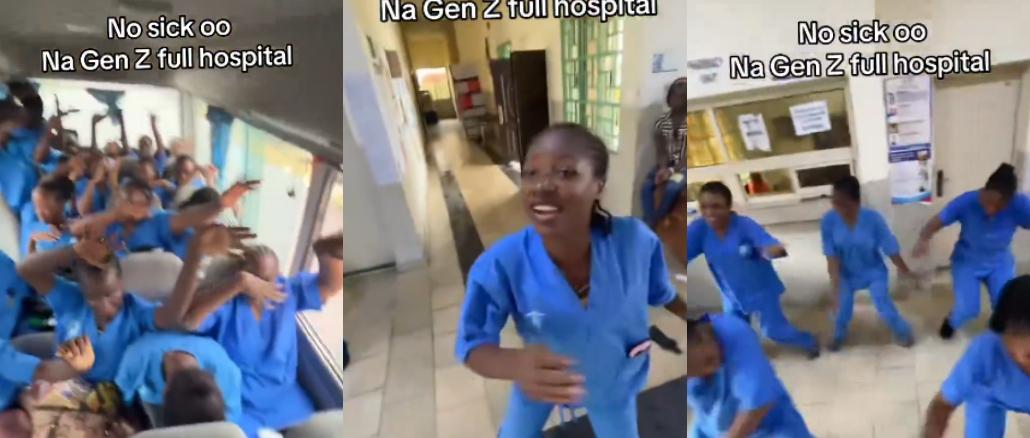

A viral video involving nursing students at Madonna University has sparked a wider conversation about social media, professional conduct, and where we should draw the line between having fun and maintaining workplace professionalism.
The video, which circulated online with the phrase “No sick o, na Gen Z full hospital,” showed students engaging in playful content within a hospital environment.
At first glance, it may look like nothing more than young people having fun. And honestly, there is nothing wrong with young people laughing, dancing, or creating content.
But the location changes the conversation.
A hospital is not an ordinary social-media backdrop. It is a clinical environment where patients are receiving care, healthcare professionals are working, and nursing students are expected to learn and demonstrate professional conduct.
That does not necessarily mean nurses and nursing students cannot have personalities or enjoy themselves. It means they have to understand when their personal social-media behaviour crosses into a professional environment.
What happened next?
The incident reportedly led to disciplinary action by Madonna University.
According to subsequent reports, 14 nursing students were suspended while one student was expelled. The National Association of Nigerian Students (NANS) subsequently appealed for the expulsion to be reconsidered, arguing that a less severe disciplinary measure could be appropriate.
The distinction is important because some early reports created the impression that the entire group had been expelled.
Was making the video wrong?
The answer isn't as simple as “they were dancing, therefore they did something terrible.”
There is no indication from the reports currently available that the students harmed a patient or deliberately interfered with medical treatment.
The bigger issue is professional judgment.
Healthcare students are preparing for professions where confidentiality, dignity, responsibility and public trust matter enormously. Content that might be perfectly acceptable at a party can become inappropriate when created inside a hospital.
And once something is uploaded to the internet, the creator no longer controls how millions of people interpret it.
But should one mistake end a student's nursing career?
That's where the debate becomes more complicated.
Discipline can be necessary when professional standards are breached. However, disciplinary action also raises questions about proportionality, the institution's rules, whether this was a first offence, whether patients were involved, whether privacy was compromised, and what exactly happened before and during the video.
Those details matter.
There is a difference between saying:
“The students should have exercised better judgment.”
and saying:
“Their entire future should be destroyed because of one video.”
Those are two very different arguments.
The real lesson for Gen Z
Social media has changed the way young people communicate.
A five-second joke can become a national controversy before the person who posted it even realizes what is happening.
For students entering professions such as nursing, medicine, law, aviation, engineering and education, social-media awareness is becoming part of professional responsibility.
Before posting, sometimes the question shouldn't only be:
“Is this funny?”
It should also be:
“Where am I?”
“Who am I representing?”
“Could this affect someone else's dignity or privacy?”
“Would I still be comfortable with this video being shown to my lecturer, employer, patient or professional regulator?”
If the answer is no, maybe the video belongs somewhere else.
The Madonna University incident is therefore bigger than one viral video.
It is a reminder that being Gen Z doesn't cancel professional responsibility—and being a professional doesn't mean you stop being human.
The challenge is learning where the two meet.